Shared context, field notes.
Notes on giving human + AI teams one place for the context behind the work.
 Agent alignment
What Is the Difference Between Agent Memory and Context Engineering?
Agent memory preserves information across steps or sessions. Context engineering decides which combination of memory, live state, retrieved evidence, tool.
 Agent alignment
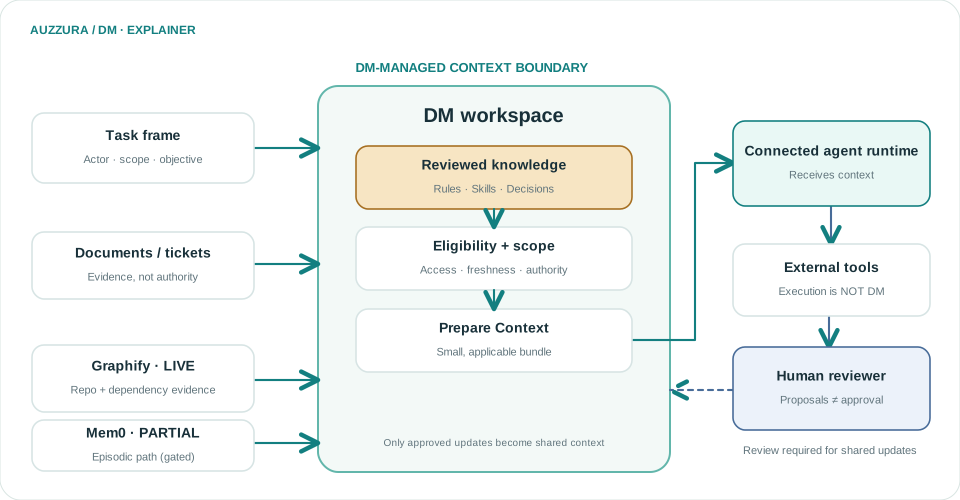
Context Engineering for AI Agents: A Practical Architecture from Eligibility to Learning
A practical context-engineering architecture for AI agents: frame the task, select sources, compress safely, observe decisions and learn from outcomes.
 Agent alignment
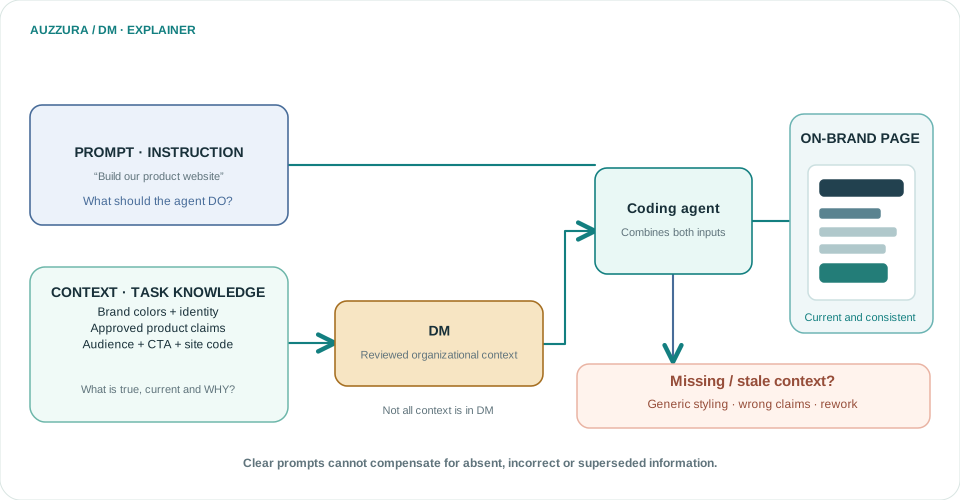
Context Engineering vs Prompt Engineering: Why Clear Instructions Still Produce the Wrong Work
Prompt engineering shapes instructions. Context engineering shapes the task state, tools, memory and organizational context an AI agent can use.
 Agent alignment
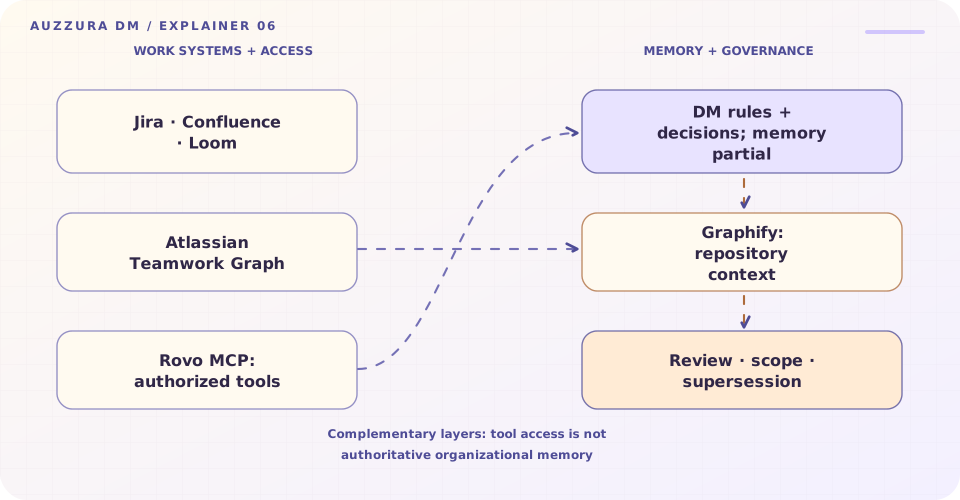
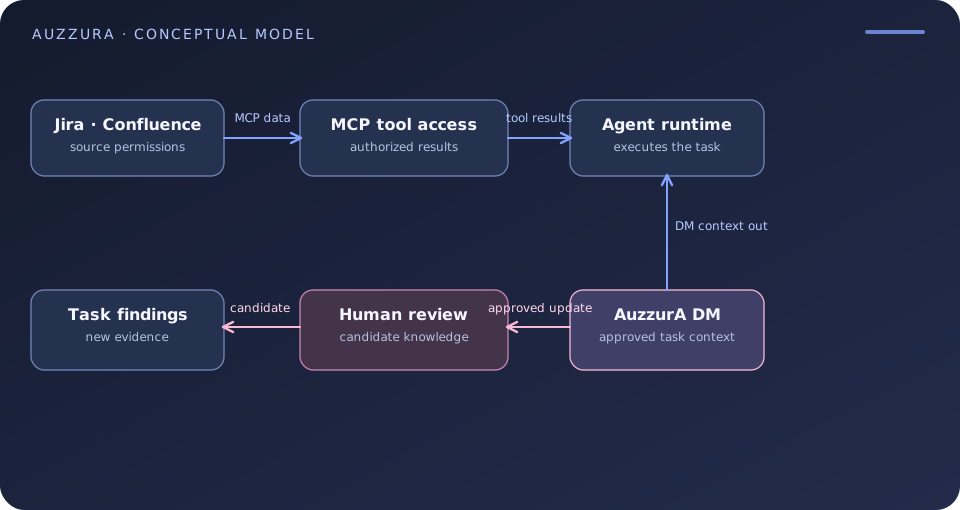
MCP Gives Agents Access to Tools. Who Decides Which Context Is Right?
MCP connects agents to tools and resources. It does not decide which organizational knowledge is trusted, current or applicable.
 Agent alignment
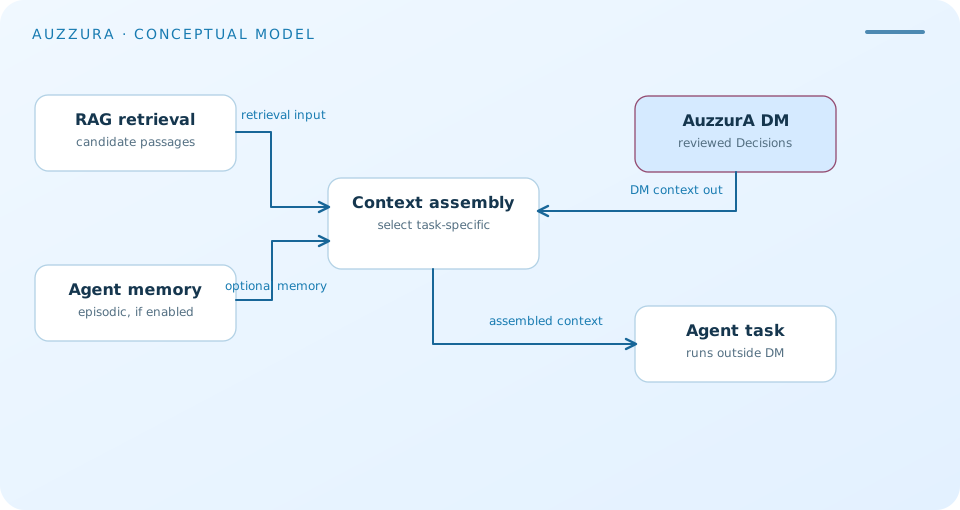
RAG vs Agent Memory vs Context Engineering: Three Different Jobs
RAG retrieves information, agent memory preserves experience, and context engineering composes the right task-specific input from both.
 Agent alignment
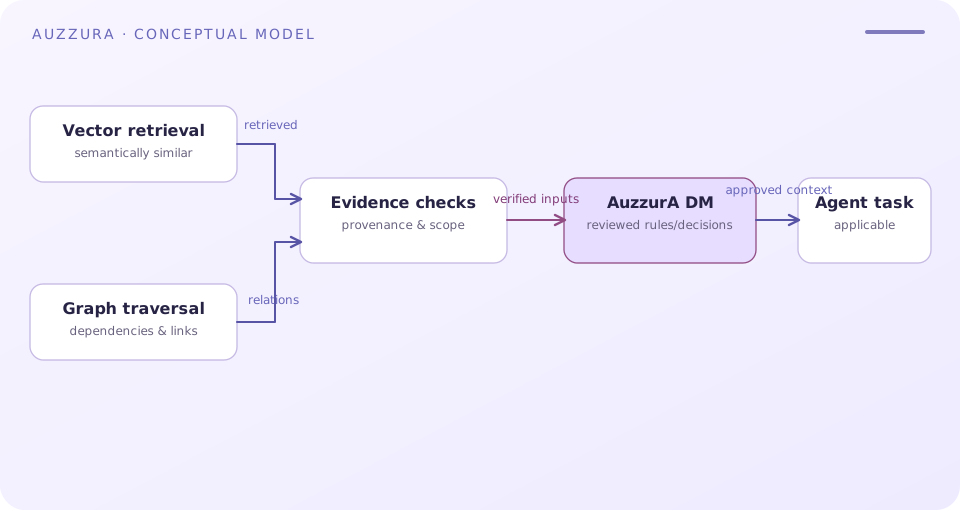
Vector Database vs Knowledge Graph: Which Does AI Context Actually Need?
Vector databases find semantically similar content; knowledge graphs expose relationships. Compare where each helps AI context and why they can work together.
 Agent alignment
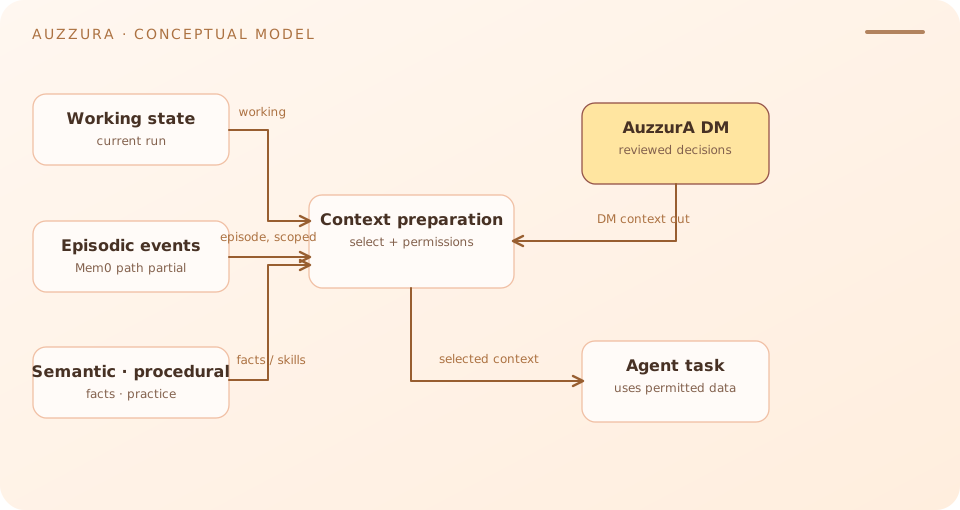
Types of AI Agent Memory: Working, Episodic, Semantic and Procedural
AI agent memory includes working, episodic, semantic and procedural state. Learn what each type stores and how it should enter a task.
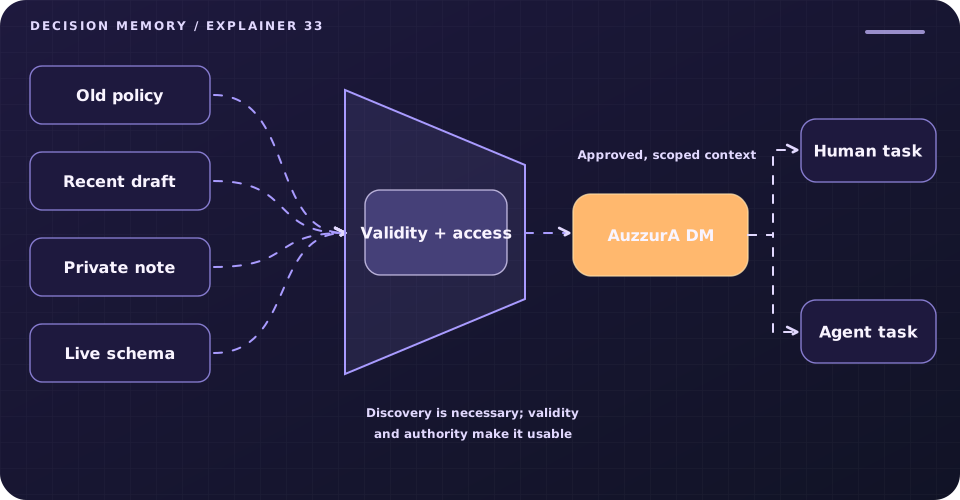 Agent alignment
Why Bigger Context Windows Don't Fix the Wrong Context
Larger context windows add capacity, but they do not solve relevance, placement, stale information, permissions or the cost of noisy context.
 Agent alignment
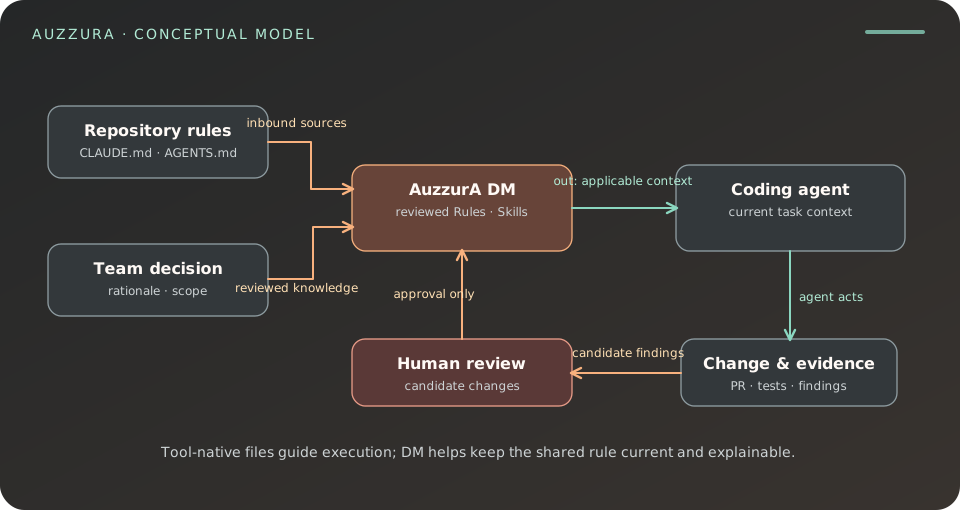
Why AI Coding Agents Ignore Team Standards Even When Their Code Works
AI coding agents optimize against the code they can see, not the decisions your team already made — producing technically-correct, organizationally-wrong code.
 Team workflows
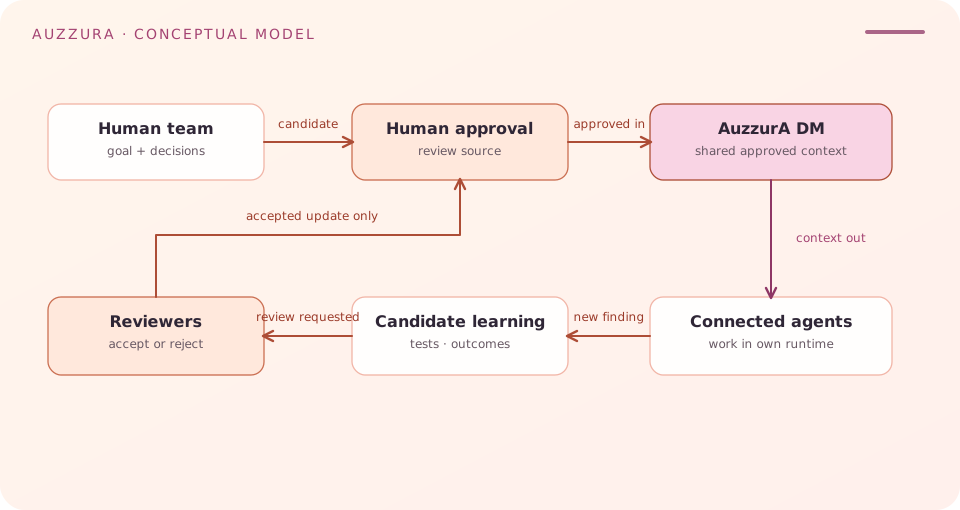
Human–AI Collaboration Needs Shared Context, Not Another Chat Window
Human-AI collaboration improves when work can carry shared context and reviewed learning across sessions, people and agents, not just chat windows.
 Team workflows
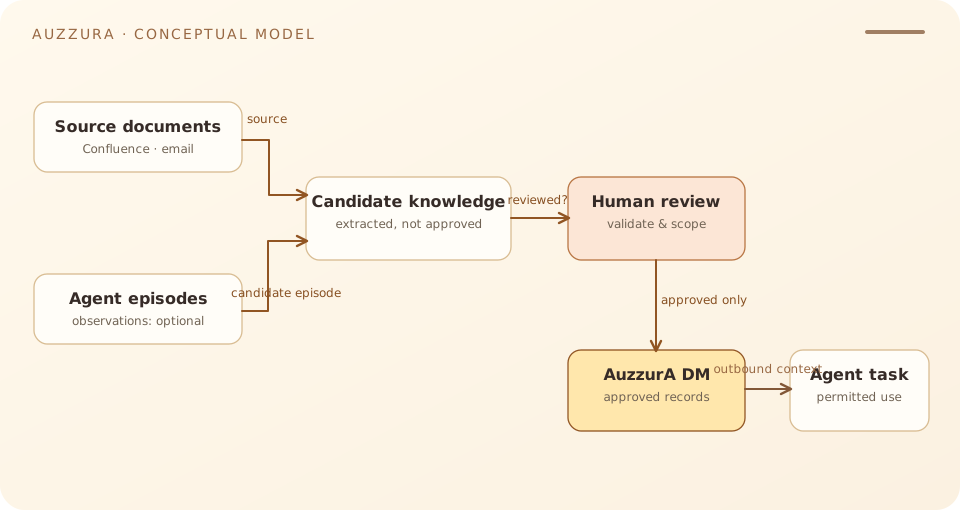
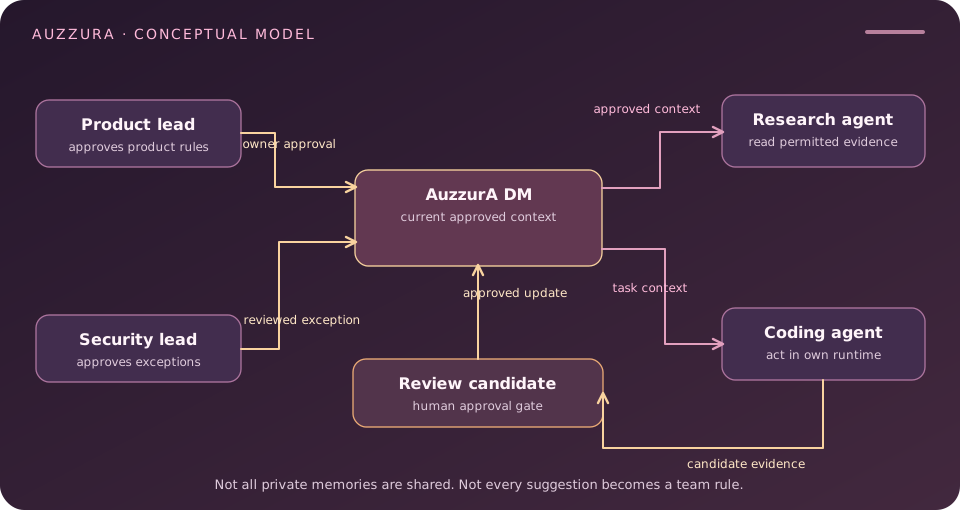
Organizational Knowledge for AI Agents: What Must Be Structured—and What Can Stay in Documents?
AI agents need typed organizational knowledge: decisions, rules, skills, owners, scope, evidence and lifecycle, not only document chunks.
 Team workflows
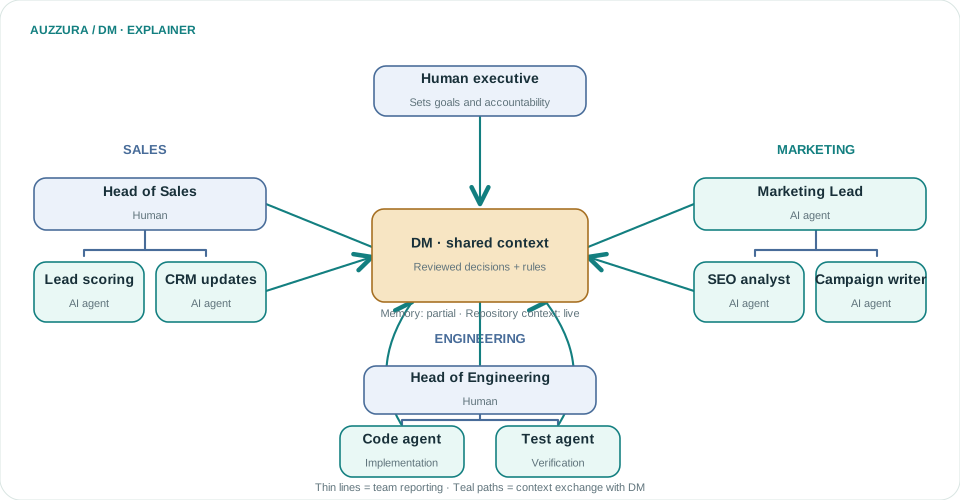
What Is a Multi-Agent, Multi-User System (MAMU)? The Missing Human Dimension
A MAMU, or multi-agent, multi-user system, must coordinate private and shared state, identity, permissions and human approval as both sides scale.
 Team workflows
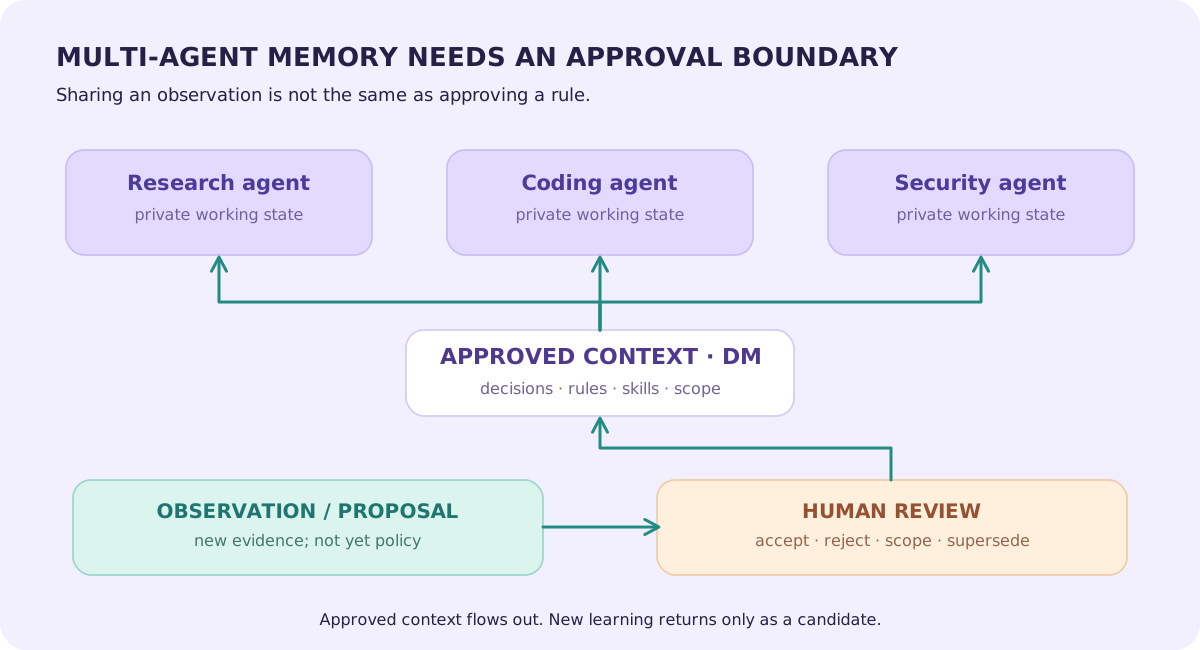
What Is an AI-Native Company? When Humans and AI Agents Share the Org Chart
AI-native companies don't just use AI tools — they restructure work so agents and humans share context, hand off tasks, and are accountable to the same memory.
 Team workflows
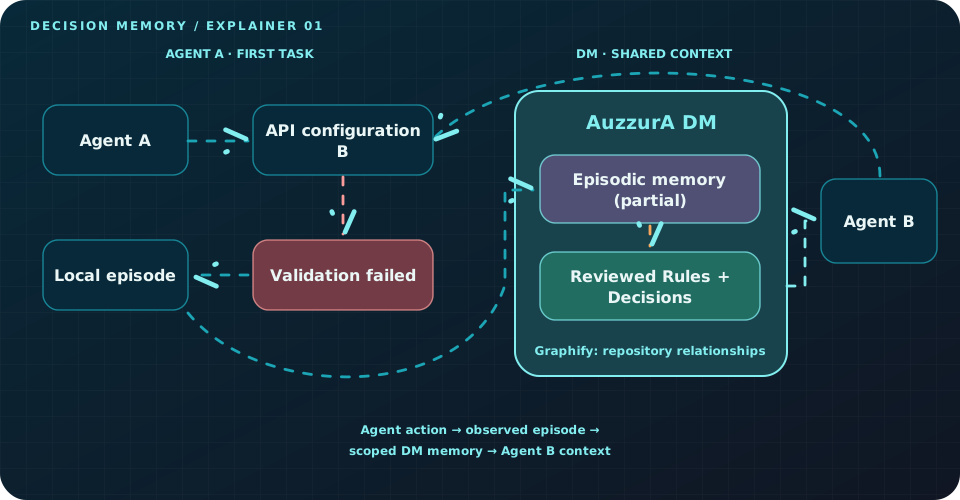
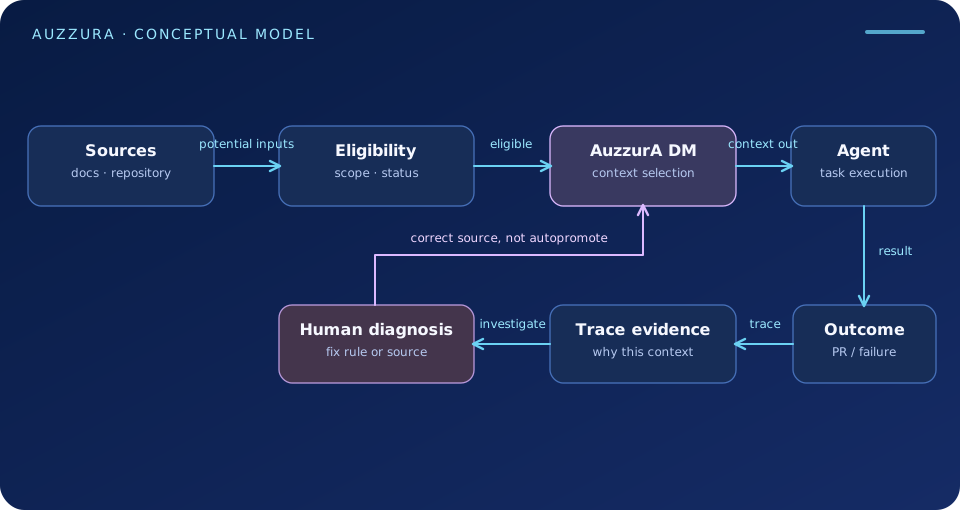
Why Multi-Agent Teams Need Shared Memory—and Why Shared Does Not Mean Trusted
Why agent collaboration needs governed shared context, not copied chat histories, and how human review prevents unapproved learning.
 Governance
Context Observability for AI Agents: What Did the Agent Know, and Why?
Context observability records what an agent could use, what it received, what was excluded and why, alongside tools and outcomes.
 Governance
Private vs Shared Agent Memory: What Should Another Person's Agent Be Allowed to Recall?
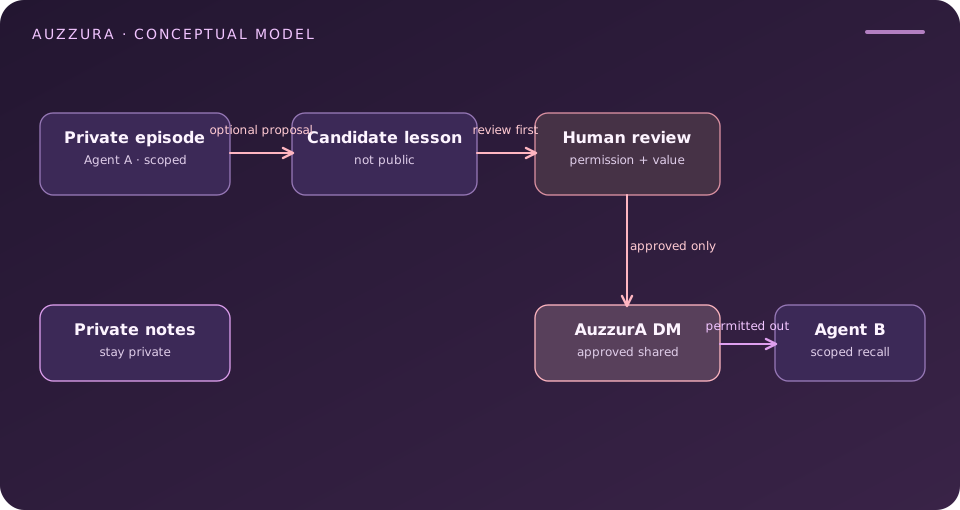
Private and shared memory need explicit visibility classes, permissions and promotion paths so “remember this” has a clear audience.
 Governance
Context Governance for AI Agents: From Raw Evidence to the Right Decision
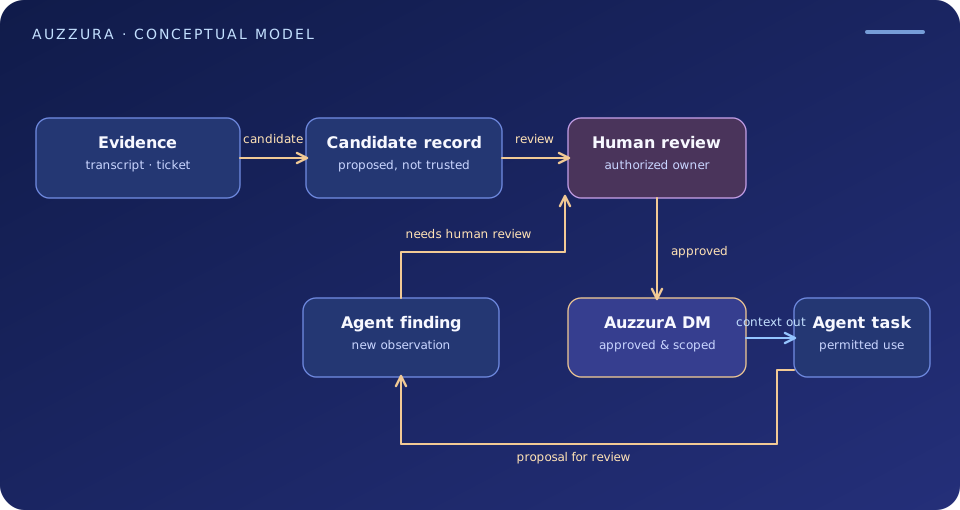
Context governance decides which information is eligible to influence an AI agent, before relevance ranking and task-time composition.
 Governance
Why Relevant AI Context Can Still Be Wrong: Scope, Authority, Freshness and Permissions
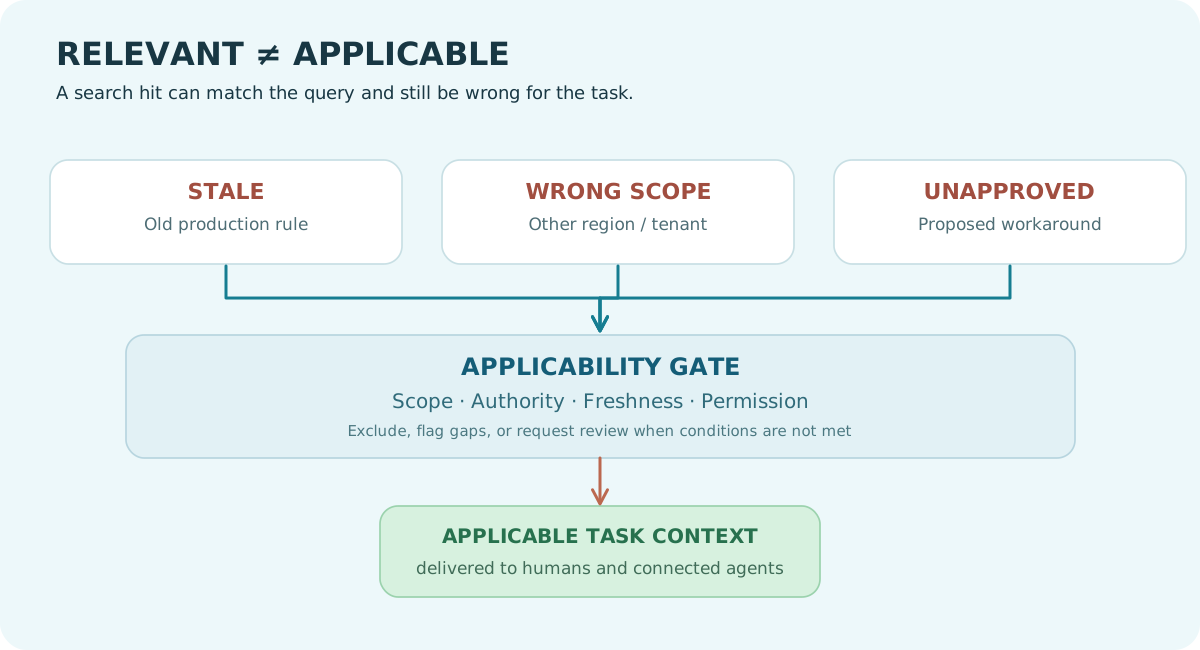
Why a relevant AI search result may be wrong for the task, and how scope, authority, freshness and permissions change context selection.
 Governance
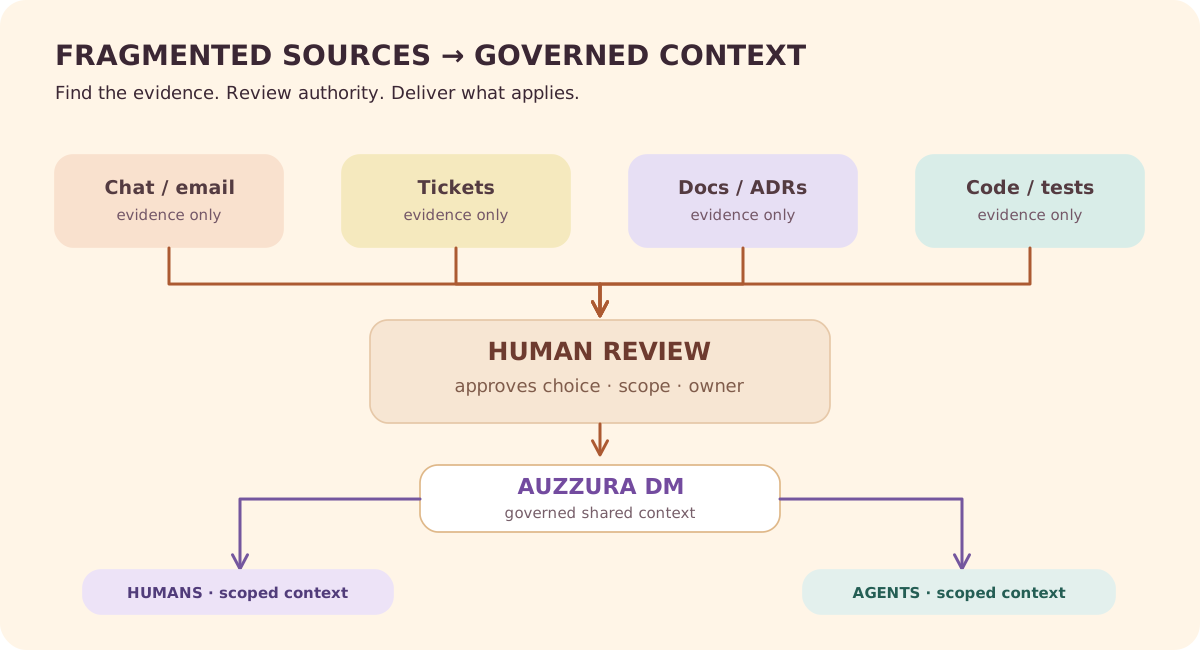
AI Can Extract Decision Rationale—but Who Approves What Becomes Memory?
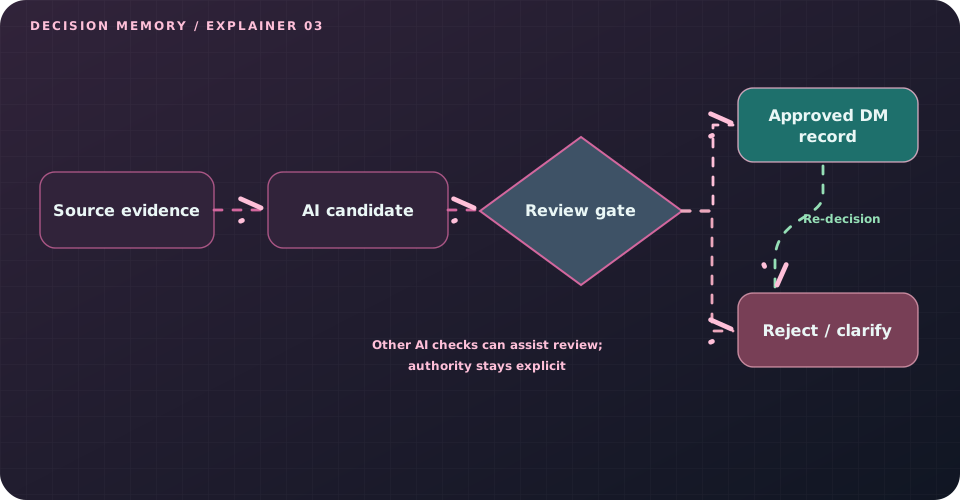
AI can propose a candidate decision and supporting rationale from notes, tickets and conversations. It cannot infer organizational approval merely because.
 Governance
Enterprise Knowledge Fragmentation: Why More Search Is Not Enough
Why documents across Slack, email, Jira and wikis cannot by themselves show which decisions are current, approved and applicable.
 Governance
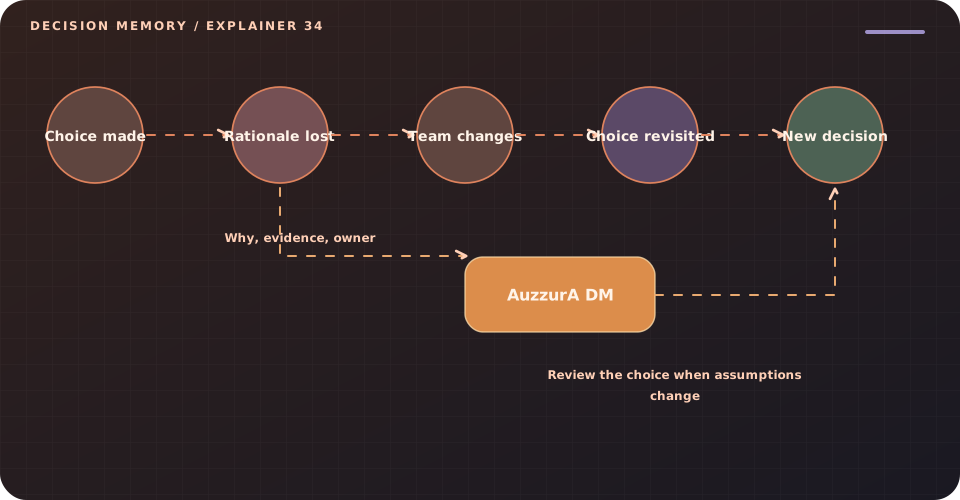
Why Teams Keep Re-Deciding: The Hidden Cost of Lost Decision Context
Teams have more tools and data than ever, yet decisions stay slow and get re-litigated. The problem isn't a lack of information — it's lost decision context.
 Governance
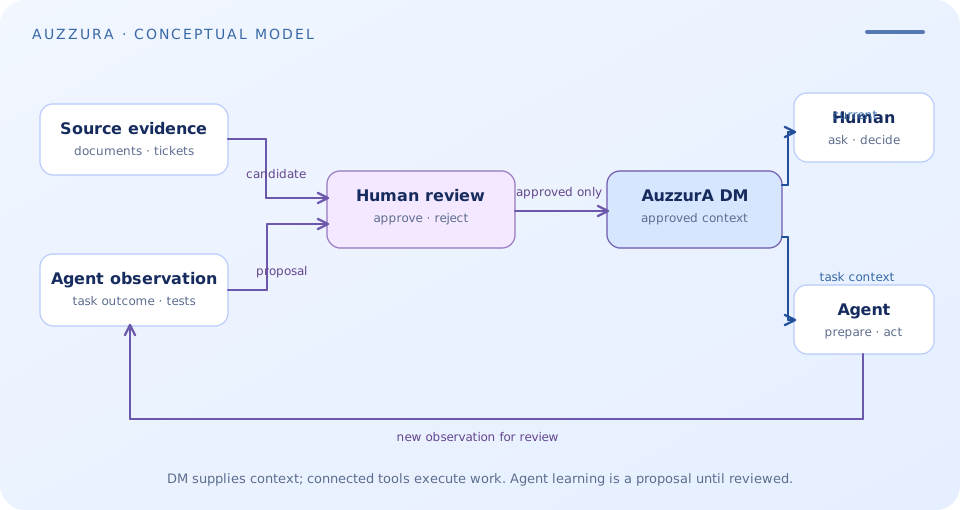
What Is AuzzurA DM? Shared Context for Humans and AI Agents
DM governs organizational context for human + AI teams — not just agent memory, and not the same as the 'decision memory' concept it builds on.
 Decision memory
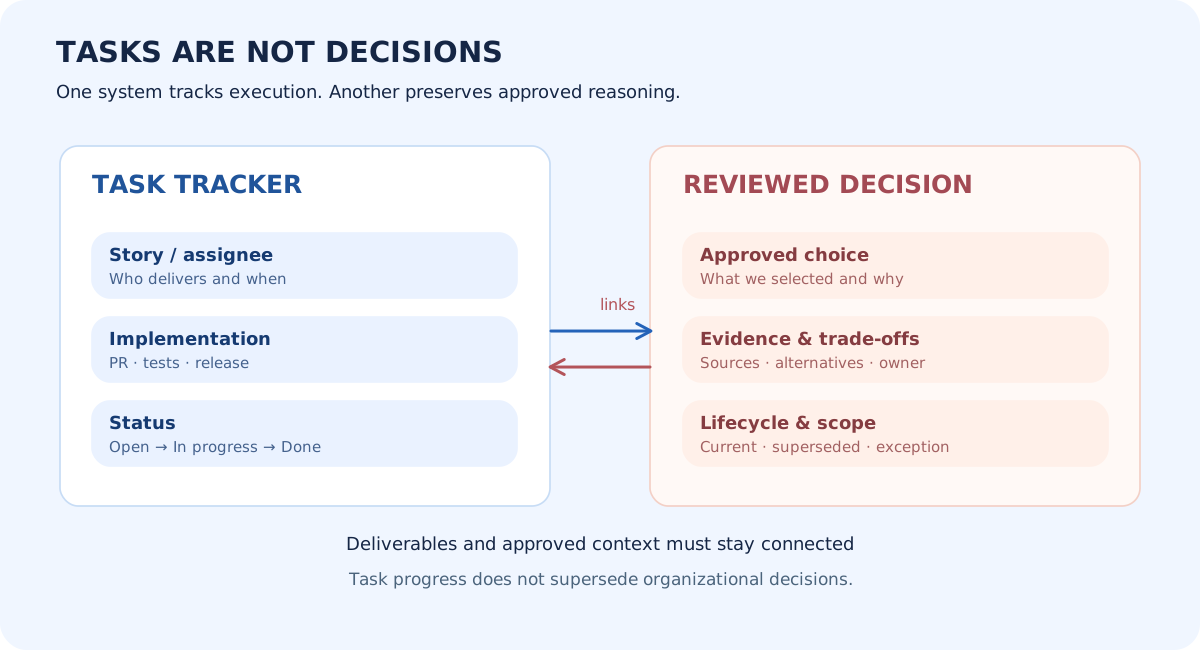
Decision History vs Task Management: Why Teams Need Both
Tasks track work; decisions preserve why. Learn how Jira and governed decision history complement each other for human and AI teams.
 Decision memory
Meeting Notes vs Decision Logs: How to Preserve What Was Decided
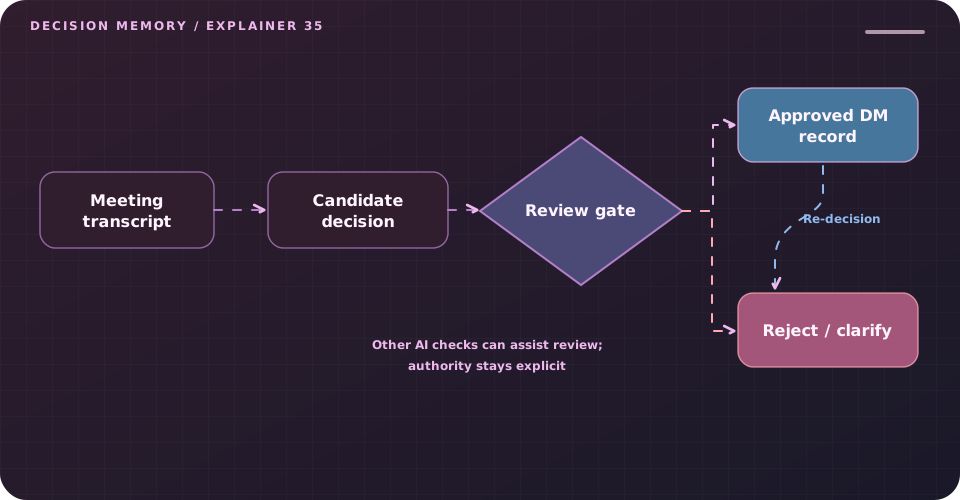
Meeting notes capture discussions. A decision log connects the choice, rationale, evidence, owner and status. See a practical template and review workflow.
 Decision memory
Why Architecture Decisions Lose Their Rationale (and How ADRs Help)
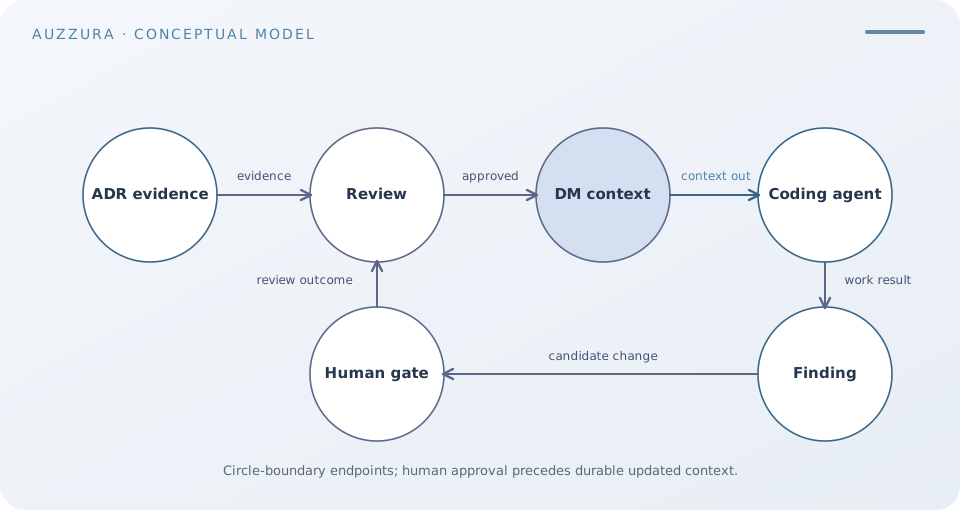
Write short ADRs for consequential technical choices, capture trade-offs and rejected alternatives, name owners, link source evidence, and retain.